Afghan Hands – The Blog

A little over a week ago, I made a return visit to the ISAF webpages to poke around. It looks like some changes have been in the works. The website, which was pretty static before, is all swish now, and comes equipped with a social media dashboard in the footer where readers can subscribe to Facebook, YouTube, and Flickr (but no Twitter) feeds. It’s also got a new Afghan Hands blog, which carries “updates from Leaders and Troops across Afghanistan”.

So far, though, it looks like ISAF has only partially embraced the vigorous public diplomacy ethic espoused by NATO SecGen Anders Fogh Rassmussen and Supreme Allied Commander Europe, Admiral Jim Stavridis. Judging by the  content of the few posts that are already up at Afghan Hands, ISAF is using this as essentially press-release-by-another-name, which is completely redundant, not to mention unnecessary: officially sanctioned, edited, and command-vetted information can be and is readily pushed to the web in other formats, and pushing it as blog content when it’s not doesn’t add credibility. If anything, in the realm of social media, it demonstrates limited understanding of appropriate and convincing uses of such technologies. There’s also no date-time stamp on individual entries, which is a small point but just as fundamental, and bad practice in any domain of publishing, whether it’s public affairs/public information, blogging, intelligence, or what have you.

To my note to ISAF Public Affairs suggesting that a date-time stamp would be really helpful, no reply. I’m going to assume for now that these are all just growing pains, and that the wrinkles are still being ironed out. NATO and ISAF are in a position to make the Afghan Hands blog a welcome and authoritative hub for information and discussion. It would be disappointing, to say the least, if they don’t make the most of an otherwise golden opportunity – and more than a little ironic, given recent arguments from MGen Mike Flynn, the ISAF intelligence chief, that intelligence analysts could stand to learn a few things from real world journalistic practice. Stay tuned.
The Junior Officers’ Reading Club

Christopher Coker of the London School of Economics and Political Science (I always want to render the “and Political Science” in parentheticals, for some reason) has an interesting review of two new books in the Times Literary Supplement: Patrick Hennessey’s The Junior Officers’ Reading Club: Killing Time and Fighting Wars and James Fergusson’s A Million Bullets. It’s a short review, but it’s a more accurate, and apt, characterization of the two authors’ subjects (Iraq and Afghanistan) than I’ve read anywhere else. This blurb on NATO struck a chord:

Traditionally soldiers have read books to orientate themselves, either to make sense of their personal experience of war or to have a greater understanding of the larger picture, “what it’s all about”. Churchill tells us he was spurred on to study by catching himself using a good many words, the meaning of which he could not define properly. What would he make of war today? As Matthew Parris pointed out in The Times, the NATO mission in Afghanistan is a semantic nightmare: “agent for change”; “assymmetric means of operation”; “capacity building”; “conditionality demand reduction”; “injectors of risk”; “kinetic situation”; “licit livelihood”; “light footprint”; “partnering and mentoring”; “reconciliation and reintegration”; “rolling out a touchdown approach”; “upskilling”. Today’s soldiers (or “stability enablers” as NATO prefers to call them) are lost in jargon. It represents both a lack of real conviction in policing the frontier, an embarrassment about war itself, and a confusion about the operational purpose, which always seems to be changing. Afghanistan is a tactically, not strategically, driven war as objectives and goals are recalibrated (usually downwards) according to success or failure in the field.

Read the rest here.


New Post at the AfPak Channel

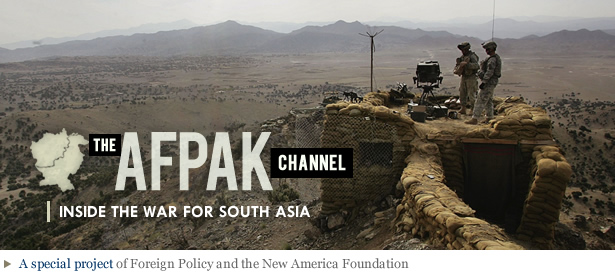
My latest contribution to Foreign Policy magazine’s AfPak Channel is now up. I take a look at some of the growing sensitivities among the Obama Administration’s senior leaders – in the White House, DoD, State.

The War of Leaks

The Obama Administration’s social media prowess has been a novelty among latter day political media machines. It helped to crowd-source the campaign funding needed to put Barack Obama in the White House, and generated a populist gloss that was, at the time, convincingly fresh and transparent. What was equally admirable was its apparent internal discipline over when information made the transition from government secret to press release. Controlling the flow of data and keeping secrets secret is a challenge under any circumstance. Combine that with a predilection for Facebook and Twitter, and a hyperactive security officer might expect policy waters to muddy more quickly than they would under normal circumstances.

So when U.S. Ambassador to Afghanistan Karl Eikenberry’s expressed his “discomfort” last week over a possible troop surge, via diplomatic cable to Washington, it’s no wonder that the message ended up dominating headlines. The New York Times reported “U.S. Envoy Urges Caution on Forces for Afghanistan.” The BBC offered a characteristically staid “U.S. Envoy Opposed to Afghan Surge.” The other Times (of London) headline was less sanguine: “Rift in U.S. War Cabinet as Obama Throws Out All Options in Debate Over Troop Surge.” How exactly the cables ended up fodder for public consumption is anyone’s guess. Secretary of Defense Robert Gates, for one, is not amused. “I have been appalled,” he told reporters last week, “by the amount of leaking that has been going on in this process” — an allusion to diplomatic decorum inspired, no doubt, by more than just untimely revelations to the press.

NATO’s Strategic Concept: Highlights From the Luxembourg Seminar

This is heartening: the NATO Newsroom has a press release (going back to mid-October, but I’ve been under a rock since then, so I’m just getting caught up) out on the ongoing Strategic Concept discussions. It’s got what looks like a developing sense of restraint and conservatism overlaying the previously iterated  (1991, 1999) boogymen of the immediate post-Cold War era (I’ve added emphasis in bold to point it out). There’s also some contradiction – compare “geopolitics is back” and “NATO’s core purpose remains the defence of its members” (ie. territorial states) to “NATO’s focus has shifted from the protection of territory to the protection of common strategic interests. Defence of these interests in the future will be more reliant on naval power.” I’m sure there’s something in international law about sea vs. territory. There are some assertions that continue to beg important questions – should NATO really be getting mixed up with things like  the security implications of climate change (the logic is infinitely stretchable) and with fixing failed states (words like quagmire come to mind)?

Reproduced below:

Highlights From the First Strategic Concept Seminar in Luxembourg

16 Oct 2009

The first Strategic Concept seminar took place in Luxembourg on 16 October, led by Dr Madeleine K. Albright, chair of the Group of Experts, and Vice Chair Jeroen van der Veer. The meeting was addressed by Jean Asselborn, Minister of Foreign Affairs of Luxembourg; Jean-Marie Halsdorf, Minister of Defence of Luxembourg; and the NATO Deputy Secretary General, Ambassador Claudio Bisogniero. All members of the Group of Experts participated in the discussions.

Participants from governments, non-governmental organizations, think tanks and academic institutions presented a variety of challenging and provocative ideas, and held lively discussions to begin thinking about the following broad themes:

  • NATO’s enduring purpose in a changing security environment: The new security environment: NATO’s strategic interests, what are the priorities and what are the vulnerabilities? NATO’s contribution to global security. The aim was to reach a common understanding of major changes in the security environment and their implications for NATO’s essential purpose and contribution to the freedom and security of its members.
  • Core tasks of the Alliance: Collective defence in today’s security environment. Article 5’s credibility and changing requirements. Adapting deterrence to the 21st century. The aim was to review the fundamental security missions of the Alliance and assess what needs to remain unchanged and what needs to be adapted, and identify what new tasks the Alliance still needs to address.
  • NATO’s political role: Is NATO still the focal point for transatlantic political consultation, and policy formulation and coordination? Anticipation and prevention: how to promote knowledge-based security within NATO? The aim was to explore the scope and efficiency of political consultation in NATO.
  • Priorities for a NATO strategy in the 21st century: three round tables discussed NATO’s level of ambition in a constrained environment; hard and soft security – soft and smart power; prioritization of missions – prevent, deter, protect, fight.

The purpose of the seminar was to stimulate a lively discussion and not to come to any conclusions at this point. Some of the highlights of presentations and discussions among participants included the following points, which the Experts Group will continue to discuss and explore in the coming months.

  • NATO’s past successes have an enduring value: they made war unthinkable among its member states; they provided a framework for democratic consolidation in Europe; and they ended the East-West conflict on peaceful terms through the path set by the Harmel report of pursuing defence and détente in tandem. NATO is a collective defence arrangement involved in cooperative security activities and a values-based political-military alliance.
  • NATO’s core purpose remains the defence of its members. The most likely future threats to member states are hybrid and asymmetrical, rather than classical armed attack. New capabilities are required for effective defence against terrorism, long range missiles, and cyber attacks. One urgent task is to protect against a WMD attack by a non-state actor, which requires steps to secure nuclear weapons, possible preventive actions to disrupt such attacks, and an active counter-proliferation policy.
  • New transnational threats are only half the story, however. Geopolitics is back. Article 5 remains at the core and strategic reassurance of all members is important. In order to be out of area, NATO needs to be in area; there is a need to preserve a strong link between Article 5 and non-Article 5 tasks. Article 5 actions today would likely require deployable forces, so there is no inherent trade off between preparing for force projection and collective defence.
  • Other tasks are likely to include: stabilization of weak and fragile states; prevention of genocide; strengthening governance and stability along NATO’s periphery; mitigating the effects of natural or man-made disasters; combating piracy; and safeguarding energy flows. To deal with these challenges, the Alliance needs to develop partnerships and cooperative security arrangements.
  • NATO’s focus has shifted from the protection of territory to the protection of common strategic interests. Defence of these interests in the future will be more reliant on naval power.
  • Other developments in the world, such as climate change, are likely to be threat catalysts and NATO may be called upon to deal with their security consequences. These could range from safeguarding sea lanes in the High North to dealing with future conflicts or humanitarian disasters in Africa.
  • Consultations on security under Article 4 of the Washington Treaty remain a key principle and the very existence of this mechanism makes conflict less likely, but Article 4 consultations are underutilized. NATO needs a higher level of ambition for consultations. NATO also needs an effective crisis management and conflict prevention mechanism.
  • Effective strategic reassurance under Article 5 requires contingency plans and a tailor-made deterrence, which should reflect the more complex strategic environment, be applicable out of area, be reinforced by the resolve to act, involve more actors, and be integrated with political dialogue. NATO must be ready to operate and reinforce deterrence in a proliferation environment through missile defence and other capabilities.
  • Getting the issue of strategic reassurance right is key for handling relations with Russia. Strategic reassurance of allies and engagement of Russia on issues of mutual interest are complementary policies.
  • To achieve NATO’s fundamental tasks the following means are required: effective partnerships with governmental and non-governmental entities; a cooperative relationship with Russia; better coordination of the constituent elements of policies; a reallocation of resources by strengthening non-military and drastically restructuring the military to make it more deployable; and a better division of labour between NATO and the EU.
  • Effective strategy will also require political will, effective means, and clarity about goals. What makes NATO unique is its integrated military structure, so there is a need to avoid a renationalization of defence policies in the context of the economic crisis.
  • Afghanistan is a critical test for the Alliance. However, there is more to Afghanistan than NATO, and NATO is more than Afghanistan. Even if NATO does everything right, Afghanistan could remain unstable due to weak governance and the shortcomings of other actors and neighbouring states. This underscores the importance of the comprehensive approach and effective partnerships. Allies face an array of other security challenges that NATO must also be prepared to address.
  • The new Strategic Concept needs to clarify NATO’s identity – what NATO is about; NATO’s effectiveness – how it does things; and NATO’s legitimacy. It should address the following issues:

Read the rest here

Omnivore 27/10/09

The “Safe Haven” Myth, John Mueller, The Nation

Information Black Hole, Salman Massood, At War/New York Times

Combating the Stigma of Psychological Injuries, Thom Shanker, At War/New York Times

Bosnia Faltering, Jon Western, Duck of Minerva

British Muslim Gangs and the Chemical Jihad, Gretchen Peters, AfPak Channel/Foreign Policy

US Is Losing Afghan War on Two Fronts, Peter Bergen, CNN

Iraq vs. Afghanistan: A Surge Is Not a Surge Is Not a Surge, Freier/Leed/Nelson, Critical Questions/CSIS

“NATO Has the Watches, We Have the Time”, James Shinn, Wall Street Journal